
- September 22, 2026
- By Samuel S
- In Windshield Calibration
- Tags Windshield Calibration
- 8
- 0
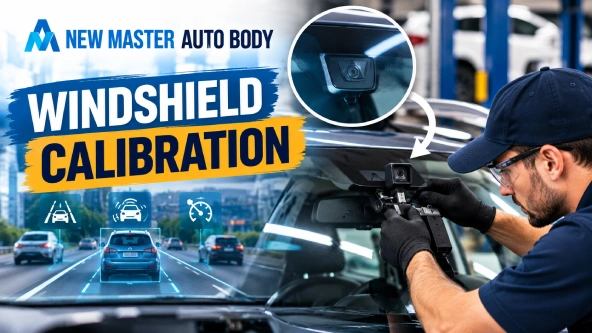
If you’ve recently replaced your windshield or experienced front-end damage, you’ve likely heard the term windshield calibration. While it may sound like a technical add-on, it’s actually a critical step in ensuring your vehicle’s safety systems work as intended.
Many modern vehicles rely on cameras and sensors mounted behind the windshield to power Advanced Driver Assistance Systems (ADAS). When the windshield is replaced, those cameras can become slightly misaligned—even by just a few millimeters. Windshield calibration restores their accuracy so features like lane departure warning, automatic emergency braking, and adaptive cruise control continue to operate safely and reliably.
Windshield calibration is the process of adjusting and testing the forward-facing camera and related sensors attached to or positioned behind the windshield. The goal is to ensure these systems are aligned according to the vehicle manufacturer’s specifications.
Today’s vehicles depend on precise camera positioning. If the camera isn’t calibrated correctly after a windshield replacement, the vehicle may misinterpret road markings, nearby vehicles, or obstacles.
Calibration is typically performed using specialized equipment and software designed for specific makes and models.
Over the past decade, automakers have added more driver-assistance technologies to improve road safety. Many of these systems depend on cameras mounted directly to the windshield.
These safety features may include:
Since these technologies rely on accurate visual information, even a slight camera shift can reduce their effectiveness.
Replacing a windshield involves removing the original glass and installing a new one. During this process, the camera housing may be removed or repositioned.
Even if everything appears perfectly installed, tiny alignment differences can affect how the camera interprets the road.
For example:
Calibration ensures the camera “sees” the road exactly as the manufacturer intended.
Static Calibration
Static calibration is performed inside a repair facility using specialized targets, laser measuring equipment, and computerized diagnostic tools.
The technician positions calibration targets at precise distances and angles from the vehicle while software adjusts the camera alignment.
Static calibration requires:
Many vehicle manufacturers require this method.
Dynamic Calibration
Dynamic calibration occurs while driving the vehicle under specific conditions.
A technician connects diagnostic equipment and drives at manufacturer-recommended speeds on clearly marked roads. During the drive, the vehicle recalibrates its cameras using lane markings and surrounding traffic.
Dynamic calibration often requires:
Some vehicles require only dynamic calibration, while others require static calibration first, followed by a road test.
Combined Calibration
Certain vehicles require both static and dynamic calibration to ensure every ADAS feature functions correctly.
Following the manufacturer’s repair procedures is essential because calibration requirements vary by vehicle make, model, and year.
Calibration isn’t only needed after replacing the windshield.
It may also be required after:
Any repair that affects camera positioning or vehicle geometry may require recalibration.
Although many calibration issues don’t produce obvious symptoms, you may notice:
If any of these occur after a windshield replacement or accident, have your vehicle inspected promptly.
Skipping calibration can compromise the performance of your vehicle’s safety systems.
Potential risks include:
Although the vehicle may seem to drive normally, its safety technology may no longer perform as designed.
Certified technicians follow manufacturer procedures to ensure proper calibration.
The process typically includes:
Step 1: Vehicle Inspection
Technicians inspect the windshield installation, camera mount, suspension, tires, and alignment.
Step 2: Diagnostic Scan
A scan tool checks for stored fault codes and identifies calibration requirements.
Step 3: Calibration Setup
Depending on the vehicle, technicians prepare either static targets or dynamic driving procedures.
Step 4: Camera Calibration
The camera is adjusted using specialized software and equipment until it meets manufacturer specifications.
Step 5: System Verification
Technicians perform another diagnostic scan and verify that all ADAS features operate correctly.
Vehicle owners sometimes make decisions that compromise safety after windshield replacement.
Avoid these common mistakes:
As vehicles become more technologically advanced, proper calibration is no longer optional for many models.
A windshield camera doesn’t have to be visibly crooked to affect performance. Even a slight misalignment—often too small to notice with the naked eye—can alter how the system measures distances and detects objects.
That’s why reputable auto glass and collision repair professionals follow manufacturer specifications instead of relying on visual adjustments. Investing in proper calibration helps ensure your vehicle’s driver-assistance systems respond accurately when you need them most.
Understanding what windshield calibration is and why it is important for cars can help you make informed decisions after a windshield replacement or collision repair. As more vehicles rely on cameras and sensors to support advanced safety features, proper calibration ensures those systems continue to operate accurately and reliably.
If your vehicle has ADAS, don’t overlook this essential step. Work with a qualified repair shop that follows manufacturer guidelines and uses the proper calibration equipment. A correctly calibrated windshield helps protect not only your vehicle but also everyone on the road.
Windshield calibration is the process of aligning the forward-facing camera and related sensors after a windshield replacement or certain repairs so ADAS safety systems function correctly.
Not every vehicle requires it, but many modern cars equipped with ADAS do. The need for calibration depends on the vehicle’s make, model, year, and the manufacturer’s repair procedures.
Calibration typically takes between 30 minutes and two hours, depending on the vehicle and whether it requires static, dynamic, or combined calibration.
While the vehicle may still be drivable, its safety systems may not work accurately. Driving without required calibration could reduce the effectiveness of features such as automatic emergency braking and lane keeping assistance.
Many comprehensive insurance policies cover windshield calibration when it is required as part of a covered windshield replacement. Coverage varies, so check with your insurance provider.
If your vehicle includes features like lane departure warning, adaptive cruise control, automatic emergency braking, traffic sign recognition, or forward collision warning, it likely uses ADAS and may require windshield calibration after certain repairs.


