
- September 28, 2026
- By Samuel S
- In Auto Body Repair, Collision Repair
- Tags adas calibration after accident, collision repair after accident, collision repair shop
- 14
- 0
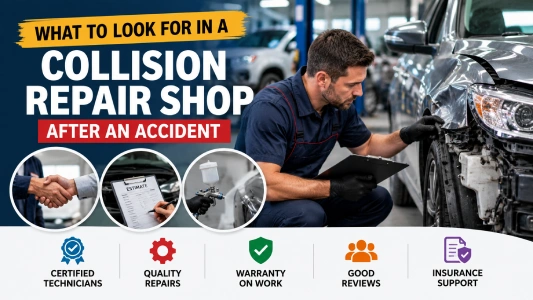
After a car accident, choosing the right collision repair shop can make the repair process much easier. You want a shop that can identify the damage, explain the repair plan, communicate clearly and return your vehicle in good condition.
But how do you know which collision repair shop to choose?
Start by looking at the shop’s repair experience, equipment, parts policy, warranty, reviews, communication and approach to insurance claims. You should also ask how the shop handles hidden damage and safety systems such as ADAS.
A good collision repair shop should give you clear information before work begins. The shop should inspect your vehicle, explain the damage, provide a written estimate and tell you what could change during the repair.
Before choosing a shop, look at these factors:
Collision repair requires more than replacing a damaged bumper or painting a panel. A serious accident can affect the body structure, suspension, sensors, glass and electronic systems.
Ask the shop how much collision repair work it handles and whether its technicians have experience with your vehicle’s make and model.
Experience also matters when a vehicle has hidden damage. A shop needs to inspect the vehicle carefully before it can determine the full repair plan.
Modern vehicles use more technology than older cars. Many vehicles now include cameras, radar sensors, driver-assistance systems and other electronic components.
Ask whether the technicians have training for the type of repairs your vehicle needs.
If your vehicle has advanced driver assistance systems, also ask how the shop checks and calibrates those systems after a collision.
Proper equipment helps technicians complete collision repairs accurately.
Depending on the damage, a repair shop may need equipment for body repair, structural measurements, paint matching, glass replacement and electronic system calibration.
You do not need to understand every piece of equipment. Instead, ask whether the shop has the tools needed for your specific repair.
Parts can affect both the repair process and the final result.
Depending on the vehicle, repair and insurance claim, a shop may use OEM, aftermarket or recycled parts.
Ask the shop:
A good repair shop should explain the options instead of leaving you to guess what will go on your vehicle.
Not all collision damage appears during the first inspection.
A damaged bumper, for example, can hide damage behind the visible exterior. A stronger impact can also affect structural components, mounting points, wiring or sensors.
Many shops discover additional damage after they remove damaged parts and inspect the vehicle more closely.
Ask the shop what happens if technicians find additional damage after the repair begins.
Ask for a written estimate before the repair starts.
The estimate should give you a clearer idea of the work, parts and labor involved. It also helps you understand what the shop expects to repair based on the initial inspection.
Remember that an initial estimate may change if technicians find hidden damage during teardown.
Ask the shop to explain any additional work before moving forward whenever possible.
Do not choose a repair shop only because someone promises a very fast repair.
The repair time depends on the amount of damage, parts availability, insurance approval, hidden damage, paint work and other factors.
Ask:
A realistic timeline is more useful than a quick promise that the shop cannot guarantee.
Paint quality can have a major effect on the final appearance of your vehicle.
Ask how the shop matches the replacement paint with the existing vehicle finish.
Modern paint systems can use vehicle information such as the year, make, model and factory paint code to help technicians match the finish.
Also ask how the shop handles blending when technicians need to make a repaired panel match nearby panels.
Many newer vehicles use Advanced Driver Assistance Systems, also called ADAS.
These systems can include cameras, radar sensors and other components that support features such as lane assistance, parking assistance and collision warning.
A collision can affect the position or operation of these components even when the damage does not look serious.
If your vehicle has ADAS, ask the repair shop whether it checks and calibrates the affected systems after the repair.
Ask whether the shop provides a warranty or guarantee on its repair work.
Before you agree to the repair, ask what the warranty covers, how long it lasts and whether any exclusions apply.
Do not assume that every repair shop offers the same warranty terms.
Customer reviews can help you understand how a collision repair shop communicates and handles repairs.
Do not look only at the star rating. Read several recent reviews and look for details about:
Reviews cannot tell you everything about a repair shop, but they can give you useful information about the customer experience.
Insurance can add another step to the collision repair process.
Ask the shop whether it works with your insurance company and how it handles estimates, approvals and additional damage discovered during the repair.
You should also understand your own insurance policy and any requirements it may have for collision repairs.
Good communication can make a stressful repair process easier.
Before choosing a shop, ask how the team will contact you during the repair.
Find out who you should contact if you have questions and how the shop will tell you about changes to the estimate or repair timeline.
A clear communication process can help you avoid surprises.
The right collision repair shop should do more than make your vehicle look good again. The repair process should address the visible damage and the components that affect the vehicle’s operation and safety systems.
Before you choose a shop, compare its experience, repair process, equipment, parts policy, warranty, reviews and communication.
Take your time, ask questions and make sure you understand the repair plan before approving the work.
New Master Auto Body provides collision repair services in Duluth, GA. The shop handles body repairs, structural repairs, paint and refinishing, glass services, bumper and fender repairs, paintless dent repair and other collision-related work.
New Master Auto Body also works with all makes and models and offers services related to aluminum repair and ADAS calibration when required.
The repair process can include damage assessment, repair planning, body work, refinishing, reassembly and final quality checks.
If you need collision repair after an accident, you can contact New Master Auto Body to discuss your vehicle and request an estimate.
New Master Auto Body
3975 Pleasant Hill Rd., #100, Duluth, GA 30096
Look at the shop’s collision repair experience, technician training, equipment, parts policy, warranty, customer reviews and communication process. Ask questions about the repair plan before approving the work.
Comparing estimates can help you understand the repair work and costs involved. Make sure you compare the actual repair scope and parts, not only the final price.
Repair time depends on the damage, parts availability, insurance approval, hidden damage, paint work and other factors. Minor repairs may take a few days, while major or structural repairs can take several weeks or longer.
Yes. Technicians may find additional damage after removing damaged parts and inspecting areas that were not visible during the initial inspection.
It depends on the vehicle and the damage. If the collision affects cameras, radar sensors or related components, the vehicle may require inspection or calibration.
Ask about the repair plan, parts, estimated timeline, possible hidden damage, insurance process, ADAS calibration, warranty and communication during the repair.


