
- October 5, 2026
- By Samuel S
- In Collision Repair
- Tags auto body repair time, collision repair, collision repair process, collision repair shop, collision repair timeline
- 5
- 0
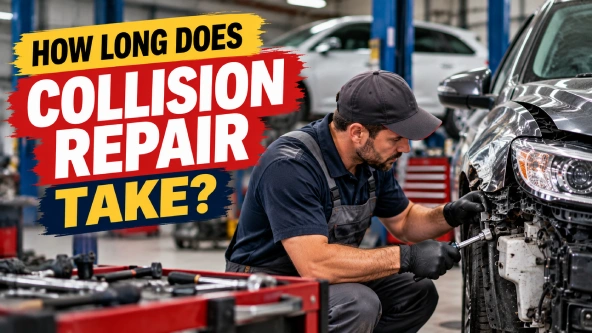
After a car accident, one of the first questions most drivers ask is, “How long will my car be in the shop?”
The honest answer is that collision repair can take anywhere from a few days to several weeks. The exact time depends on the amount of damage, parts availability, insurance approvals, hidden damage, paint work and whether the vehicle needs additional inspections or ADAS calibration.
A simple cosmetic repair may move through the shop fairly quickly. A vehicle with structural damage, multiple damaged areas or unavailable parts can take much longer.
There is no single repair time that applies to every accident.
As a general planning guide:
These are general ranges, not promises. The actual timeline depends on what technicians find during the inspection and repair process.
The repair itself is only one part of the timeline.
Before a vehicle reaches the final quality check, the shop may need to inspect the damage, prepare an estimate, order parts, obtain insurance approval, disassemble damaged areas, repair the body, complete paint work, reassemble the vehicle and check electronic systems.
If technicians find additional damage after removing damaged parts, the repair plan can change again.
The severity of the accident usually has a major effect on repair time.
A small dent or damaged bumper may require much less work than a collision involving several panels, suspension components or structural parts.
For example, a repair involving one damaged exterior panel may move through the process faster than a vehicle that needs body repair, replacement parts, paint blending and electronic system checks.
The visible damage does not always tell the entire story.
Some collision damage stays hidden until technicians remove damaged components.
A bumper cover may look like the main problem, while components behind it may also need inspection. A stronger impact can affect mounting points, wiring, structural components or sensors.
Once technicians discover additional damage, they may need to update the repair estimate and determine which additional parts and procedures the vehicle needs.
This is one reason a repair shop may not be able to provide a final completion date during the first inspection.
Even when technicians know exactly what the vehicle needs, the repair cannot always move forward until the required parts arrive.
Parts availability can vary depending on the vehicle, part type, supplier and current inventory.
If an important part becomes delayed or unavailable, the vehicle may remain in the repair process while the shop waits for it.
Before approving a repair, ask the shop whether the required parts are available and whether any parts could affect the expected timeline.
Insurance claims can add another stage to the repair process.
The initial estimate may change after technicians inspect the vehicle more closely. If the shop finds additional damage, the updated repair work may need documentation and insurance review before certain work can continue.
This process can take additional time, particularly when the repair plan changes after teardown.
Ask the repair shop how it handles insurance supplements and how it will keep you informed if approval affects the repair schedule.
Body repair does not end when the damaged panel looks straight.
Paint and refinishing can involve preparation, color matching, application, curing and blending with surrounding panels.
The shop needs enough time to complete these steps properly rather than rushing the vehicle through the paint process.
A good repair timeline should account for the refinishing work required by the vehicle.
Many newer vehicles use Advanced Driver Assistance Systems, commonly called ADAS.
These systems can include cameras, radar sensors and other components connected to features such as lane assistance, collision warnings and parking assistance.
A collision can affect sensors or their positioning even when the visible body damage appears relatively minor.
Depending on the vehicle and the repairs performed, technicians may need to inspect, diagnose or calibrate affected systems before the vehicle leaves the shop.
That additional work can become part of the overall repair timeline.
A vehicle with structural damage generally requires more extensive repair than one with cosmetic damage.
Structural repairs can involve detailed measurements, specialized equipment, replacement components and additional inspections.
The shop may also need to complete related mechanical or electronic checks before returning the vehicle to the customer.
For that reason, structural damage can extend the repair timeline considerably.
Understanding the repair process makes the timeline easier to understand.
The shop begins by examining the vehicle and documenting visible damage.
The shop creates an estimate based on the damage identified during the inspection.
If the repair involves an insurance claim, the estimate and repair plan may need review and approval.
The shop identifies the required parts and orders anything that is not already available.
Technicians remove damaged components when necessary so they can inspect areas that were not visible during the initial inspection.
If technicians find additional damage, they update the repair plan and estimate as needed.
Technicians repair or replace damaged components according to the repair plan.
The vehicle moves through the preparation, painting and refinishing process required for the repair.
Technicians reinstall the repaired and replacement components.
The vehicle may require diagnostic checks or ADAS calibration depending on the vehicle and repair.
The shop checks the completed repair before returning the vehicle to the customer.
Customers often receive an estimated completion date when they drop off their vehicle. That date can change when the repair reveals information that the shop could not see during the initial inspection.
Common reasons include:
A changed completion date does not automatically mean the shop has done something wrong. Sometimes the repair simply becomes more involved after technicians get access to areas that were hidden at drop-off.
A shop can provide an estimated timeline, but an exact pickup date may not be possible before technicians inspect and disassemble the vehicle.
The more complicated the damage, the more factors can affect the schedule.
A reliable shop should explain the expected timeline and communicate with you if important changes affect the completion date.
You cannot control every part of a collision repair timeline, but you can ask the right questions before the repair begins.
These questions give you a better understanding of what happens after you leave the vehicle at the shop.
The answer depends on your vehicle and the damage it sustained.
A small cosmetic repair may take only a few days, while a vehicle with multiple damaged areas or structural problems can remain in the shop for several weeks.
The most useful question is not simply “How many days will it take?” Ask the shop what work your vehicle needs and which parts of the process could affect the schedule.
New Master Auto Body provides collision repair services in Duluth, GA, including damage assessment, body and structural repairs, paint and refinishing, glass services, paintless dent repair and other collision-related work.
The shop works with all makes and models and offers services that include aluminum repair, bumper and fender repairs, auto glass installation and ADAS-related services.
New Master Auto Body also works with insurance companies and provides daily communication through its repair process. The shop states that its collision repair process includes steps from pre-scan through quality assurance.
If your vehicle has been damaged in an accident, you can contact New Master Auto Body to discuss the damage and request an estimate.
Collision repair can take a few days for minor damage or several weeks for more extensive repairs. The actual timeline depends on damage severity, parts availability, insurance approval, hidden damage, paint work and other repair requirements.
Auto body repair time depends on the type of damage. A small dent or limited cosmetic repair may take a few days, while multiple-panel or structural repairs can take considerably longer.
A bumper repair can range from a relatively short repair to a longer job if the bumper requires replacement, paint work or additional components need repair behind it.
Frame or structural repair generally takes longer than simple cosmetic body work because technicians may need measurements, structural repairs and additional inspections before completing the vehicle.
Yes. Insurance review and approval can affect the repair timeline, especially when technicians discover additional damage and need to update the repair estimate.
Yes. Technicians may discover additional damage after removing damaged parts. The shop may then need additional parts, repair procedures or insurance approval.
It can. If the collision or repair affects ADAS components, the vehicle may need additional diagnostic checks or calibration before the repair is complete.
There is no universal number of days for collision repair.
The repair timeline depends on what happened to the vehicle, what technicians find during the inspection, whether parts are available, how the insurance claim progresses and what work the vehicle needs before it can leave the shop.
Instead of choosing a repair shop based only on the shortest promised timeline, ask for a clear explanation of the repair process and the factors that could change the completion date.
A realistic repair timeline gives you a better idea of what to expect and helps you plan transportation while your vehicle is in the shop.
If you need collision repair in Duluth & Atlanta, GA, contact New Master Auto Body to discuss your vehicle and request an estimate.
Also Read
What to Look for in a Collision Repair Shop After an Accident


